The Power of the “Visit” domain pattern
Birth of “Visitors Bureau”
The first Tourist Information offices appeared in Europe in the late 1800s. They grew alongside rail travel. France and Switzerland had the first Visitors Bureau in 1880. National Tourism Organisations formed in the early 1900s — among them France and Italy.
Birth of “online” Tourist Information
The first online sites appeared in 1994. Early examples included Hotel Listings and Travel Tips. Many Tourist Boards used an institutional style with bulky website addresses; hyphens were frequently used. Common patterns:
- citytourism.com
- city-tourism.com
- citytourismboard.org
- city-tourismboard.org
- cityinfo.com
- city-tourismus.com
Why: websites were treated as digital brochures, focused on authority rather than engagement, and run mostly by government entities.
Birth of “Visit + destination.com”
The first “Visit” sites came alive in California, the place where internet was born. The first one was adopted by the tourist board of Mammoth Lakes in 1995. In 1996 more US destinations followed — Rhode Island, Bloomington (Indiana) and Vallejo (California). VisitEurope.com was the first non-US destination, registered by the European Travel Commission.
When coming alive, many tourist sites adopted an institutional style.
Before ~2005: Institutional era
2006–2012: Branding begins
Emerging patterns: discovercity.com, explorecity.com, and a mixed use of tourism and verbs. Why: tourism marketing became competitive, SEO mattered more, and destinations started branding themselves like products.
2013–Present: Call-to-Action dominance
Strong growth of visitcity.com and visitdestination.com. Examples launched or promoted during this era: visitlondon.com, visitdubai.com, visitoslo.com, visitsingapore.com, visiticeland.com.
Why this pattern won:
- Action-oriented (“visit” implies travel intent)
- Language-neutral (easy for non-native speakers)
- Marketing friendly
- Short, memorable
- Works globally across cultures
Why visitdestination.com keeps growing
1. Search behavior changed
Users increasingly search phrases like “visit paris”, “visit japan”, “visit barcelona”. This directly reinforces the pattern.
2. Tourism boards think like brands now
Modern destination marketing organizations (DMOs) run global ad campaigns and need a single, strong brand domain that works on billboards, social media, TV ads and QR codes. visitdestination.com performs best across all of those.
3. Trust & authority transfer
Ironically, “visit” sounds promotional, but users now associate it with official sources. So visitcity.com reads as likely official, while city-tourism.com reads as possibly private. That perception didn't exist 20 years ago — it does now.
Relative decline of other patterns
| Pattern | Trend |
|---|---|
| visitdestination.com | 📈 Strong growth |
| discoverdestination.com | ➖ Stable |
| destinationtourism.com | 📉 Declining |
| destination-tourism.com | 📉 Strong decline |
| destinationinfo.com | 📉 Declining |
| destination.travel / festination.vacations | Uncomprehensive, looks outdated |
Yes — visitdestination.com has become significantly more popular over time, and it is now the dominant pattern for new official tourism portals, the preferred upgrade when old tourism sites rebrand, and the safest long-term choice if you're building today.
Around the Globe there are a few “Discover”, “Explore”, “Destination” and “Tourism” domains — but “Visit” outshines every other domain format.
Impact of Phone Book of the World and Global Visit List
Created at the turn of the century, Phone Book of the World promotes easy-to-remember Tourist Board websites. By creating a specific Global Visit List, the impact was amplified: Global Visit List produces a network effect and reinforces user trust over a proven naming convention.
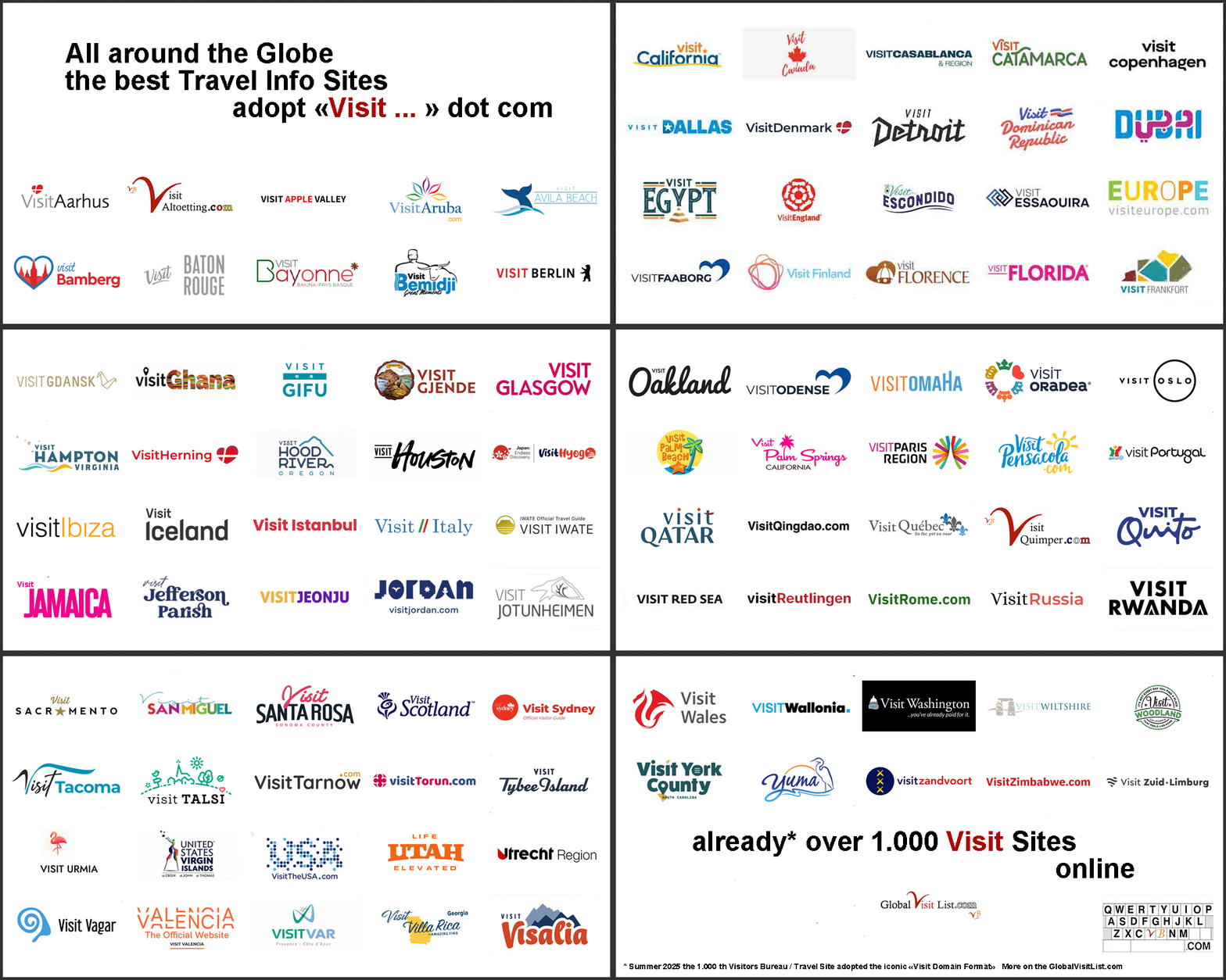
more about the story… To get some inspiration for a cool “Visit” site, check out Global Visit List.com. This curated list shows many Visit Sites that are well done.